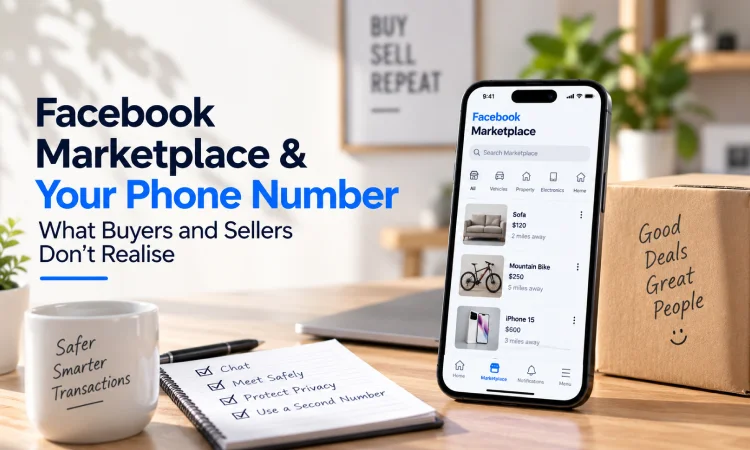
A buyer messages you. The item is a sofa, a bike, a phone you no longer use. After a few messages agreeing on price, they ask if they can text you directly to sort out collection.
It feels reasonable. Texting is easier than messaging through an app. Most people just give the number without thinking twice.
Facebook itself does not agree with this approach. Their own safety guidelines specifically advise users to keep communication inside Messenger for as long as possible, precisely because once you move to a personal number, they lose the ability to help if something goes wrong. There are no logs, no evidence trail, no platform protections. It is just you and whoever is on the other end.
But there is more to it than losing the paper trail. What can actually happen when a stranger on Marketplace gets your personal number is worth understanding before the next time someone asks.
The Verification Code Scam Most Sellers Have Never Heard Of
This one is worth knowing in detail because it is both common and genuinely surprising the first time you encounter it.
A buyer contacts you. They seem legitimate. They say they want to make sure you are a real person before committing to the purchase. They ask if you can verify yourself with a code they will send to your phone. A code arrives. You read it back to them. The conversation ends.
What just happened: the buyer used your phone number to register a Google Voice account, or a similar service, in their name. The code you gave them was the verification code for that registration. They now have a functioning phone number associated with their identity, verified through yours. Your number has been used to create an account you have no knowledge of or control over.
According to the National Cybersecurity Alliance, this verification code scam is one of the most consistent patterns reported across Facebook Marketplace transactions. The buyer gets a usable number to run further scams from. You get nothing except a number that is now quietly associated with someone else’s account.
Facebook’s own safety guidance is direct on this: if anyone asks you to share a code sent to your phone as part of a Marketplace interaction, do not do it. The legitimate transaction does not require this. No genuine buyer needs to verify your identity this way.
What a Stranger Can Do With Your Marketplace Number
Beyond the specific verification scam, a personal number obtained through Marketplace can be used in several ways that have nothing to do with the original transaction.
It can be used for harassment if a deal falls through or a buyer or seller is unhappy with the outcome. Off platform contact is much harder to resolve than in app disputes, because Marketplace can only review messages sent through Messenger.
It can end up in a spam list. Numbers obtained through peer to peer selling platforms get fed into commercial contact databases. Research consistently shows that numbers shared in high frequency transaction contexts, classifieds sites and marketplaces, are disproportionately represented in spam call lists. We cover the exact mechanism in our blog on why your phone number ends up on spam lists.
It can be used for targeted phishing. Someone who knows you were selling a specific item at a specific price has enough context to construct a convincing follow up message days or weeks later. A text claiming there is a problem with a recent payment, or that you owe something related to the transaction, uses that transaction context as credibility.
It can be used as an identity signal in data broker databases. Your name, the platform you were selling on, your general location, and your number are sometimes enough for a data broker to connect your Marketplace activity to other records they hold on you.
Why Facebook Itself Says Stay in Messenger
Facebook Marketplace’s official safety guidance states that buyers or sellers requesting you contact them by phone or email, especially early in the conversation, may have bad intentions. They note that off platform scams are most common in vehicle, rental, and home goods categories, which happen to be the highest value transaction types.
This is not a small caveat buried in terms and conditions. It is prominent, repeated guidance from the platform itself. The reason they give it so clearly is that they have no ability to help with anything that happens outside their own messaging system. They cannot review the messages. They cannot use them as evidence in a dispute. The moment the conversation moves off platform, their tools and protections stop working.
When you give your number to a Marketplace buyer or seller, you are not just moving to a more convenient communication channel. You are moving outside the only environment where there is any accountability for what happens next.
When Sharing a Number Makes Sense and How to Do It More Safely
This is not an argument for refusing all off platform communication. There are times when sharing a number is reasonable: you have verified the person through their profile, you have had a detailed conversation, the transaction is imminent and you need to coordinate pickup timing.
The question is which number.
A second phone number used specifically for Marketplace transactions gives you a working contact that buyers can call and text normally. From their side the interaction is identical. From your side the number is not connected to your personal identity, your other accounts, your family, or anything else. If the transaction goes badly and the contact becomes unwanted, you have options your real number does not give you.
If the verification code scam is attempted, it fails, because the code goes to a number that is not tied to your primary accounts and identity.
If the number ends up in a spam list or a data broker database, the contacts go somewhere that is not your real phone.
You can see exactly how Second Line Number works for this kind of everyday separation on our features page.
→ Get a second number for Marketplace so your real one stays out of it
What to Do If You Have Already Shared Your Real Number
If you have already given your personal number to someone on Marketplace and the interaction is now making you uncomfortable, here is the sensible order of steps.
Stop responding off platform. Move any ongoing communication back to Messenger if possible, or stop engaging entirely if the situation warrants it.
Block the contact on both Messenger and from your personal number simultaneously. Blocking on one channel while remaining reachable on the other keeps a route open.
Report the profile to Facebook through the in app reporting tool. If there was any attempt to obtain a verification code, this is worth flagging specifically as it follows a documented scam pattern.
If you received and read back a verification code before realising what was happening, check whether a new account in your name or using your number has been registered on Google Voice or similar services. You can reclaim a Google Voice number by going through their account verification process with your number directly.
Our blog on why blocking alone does not solve the problem covers the longer term steps for managing a number that has been exposed, since the practical situation is the same regardless of how the exposure happened.
If you have any questions about setting up a second number for Marketplace use, our support centre is available or you can contact us directly.
Frequently Asked Questions
Is it safe to give my phone number to a buyer or seller on Facebook Marketplace?
Facebook’s own safety guidelines specifically advise against sharing your personal phone number with Marketplace contacts, recommending that communication stays within Messenger where possible. The risks include harassment if a deal goes badly, your number entering spam databases, targeted phishing using transaction details as context, and a specific scam where buyers use your number to register accounts on other services using verification codes they trick you into reading back to them.
What is the verification code scam on Facebook Marketplace?
A buyer or seller asks you to verify your identity by reading back a code they send to your phone. The code is actually a verification code for registering an account on a service like Google Voice. Once you read it back, they have used your number to create a functional account associated with their identity. This is one of the most consistently reported scam patterns across peer to peer selling platforms. No legitimate Marketplace transaction requires you to share a code sent to your phone.
What happens if I take a Marketplace conversation off platform?
Once communication moves off Facebook Messenger to text, WhatsApp, or a phone call, Facebook has no ability to review that conversation, use it as evidence in a dispute, or assist if something goes wrong. You also lose the accountability that comes with a buyer or seller being connected to a Facebook profile. Their official guidance states that requests to move off platform early in a conversation may indicate bad intentions.
Can I use a second number for Facebook Marketplace instead of my real one?
Yes, and this is exactly what a second number is built for. A second number functions identically to a real mobile number for calls and texts. Buyers and sellers can reach you normally. The difference is that your primary personal number, with all its connections to your accounts, identity, and contacts, never enters the transaction at all.
What should I do if I accidentally shared a verification code with a Marketplace contact?
Check immediately whether a Google Voice account or similar number has been registered using your phone number. You can reclaim a Google Voice number by going through their account setup using your number, which will transfer it back to your control. Change any account passwords where your phone number is used for recovery or two factor authentication, and report the Marketplace contact to Facebook with as much detail as you have about the interaction.