
Starting university means starting over in a specific way that most students do not fully appreciate until later.
New city. New accommodation. New social life. New accounts for everything. Student discount platforms, accommodation portals, library systems, club sign-up sheets, freshers event registration, food delivery apps, the university’s own VLE, three different apps for managing timetables, and probably another four that seemed useful in Freshers Week and were never opened again.
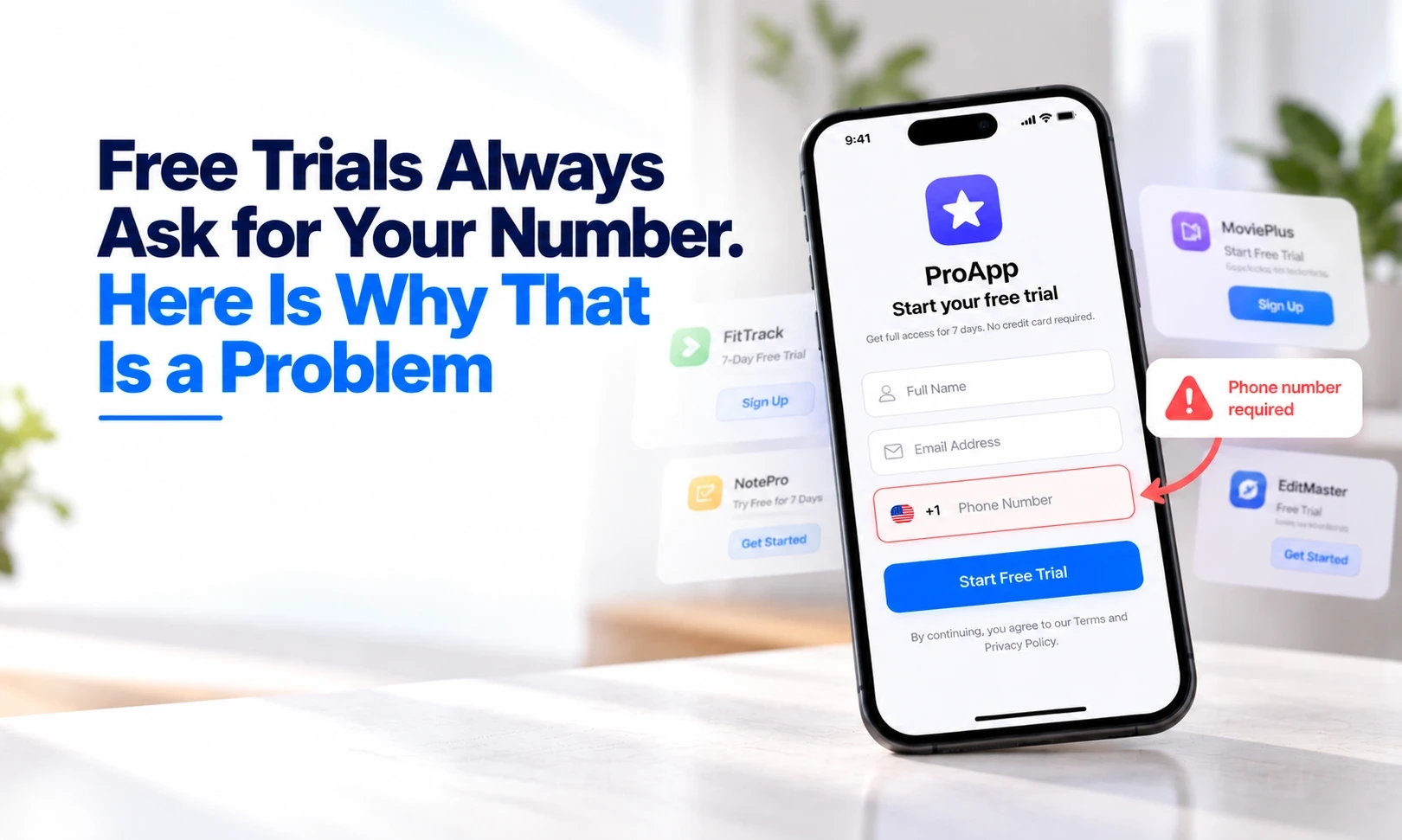
Every single one of those platforms asks for a phone number.
Most students hand over the same number for all of them, because it is the only one they have and it feels like a low stakes decision. It is not. Understanding what actually happens to that number over three or four years at university is the kind of thing most students only think about when the damage is already done.
The Scale of What Students Sign Up For
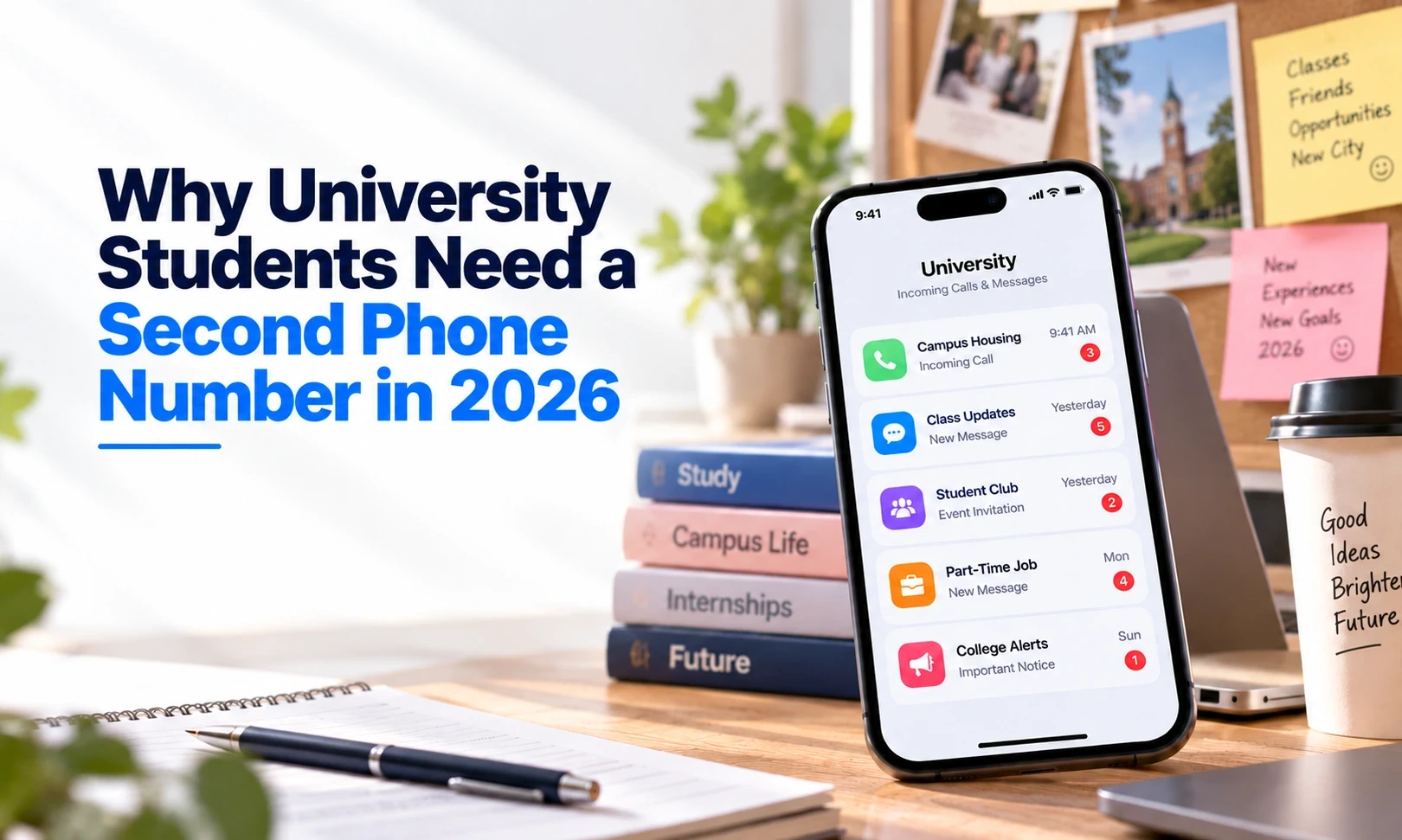
University is probably the highest density period of account creation most people ever go through. In the first month alone, a typical student will create accounts with the university itself, student union platforms, accommodation management portals, course specific software, library systems, student discount aggregators, freshers event booking systems, food delivery apps, club and society sign-up pages, local gym introductory offers, part time job platforms, and whatever social apps are currently relevant.
Each of these either requires or strongly nudges a phone number. Some need it for verification. Some claim to need it for security. Some want it for marketing and dress that requirement up as something more essential.
By the end of a four year degree, a student who has given their personal number to all of these has a number that appears across dozens of commercial databases. Some of those databases have reasonable security practices. Many do not. And some of those platforms are startups that will cease to exist before the student graduates, leaving customer data sitting in systems with no active owner maintaining them.
In May 2026, the Canvas LMS breach exposed data from approximately 275 million users including students at institutions worldwide. The data included personal messages between students and teachers along with contact information. Canvas is the learning management system used by thousands of universities. Students did not choose to be on Canvas. Their institution put them there. Their contact details went with them.
This is one breach. It is not unusual. US News and World Report notes that since 2005, K-12 schools and universities have experienced data breaches consistently. The student population is a particularly rich target because it contains large volumes of personal data, payment information, and identity documents in one place.
The Specific Risks Students Face That Are Different From Adults in Work
Students are at a distinct stage of identity formation that creates specific vulnerabilities around phone numbers.
Most students are using their phone number for the first time as an independent adult. The number they register with everything in their first week of university may be the same number they carry for the next forty years. Every account, every platform, every database that captures it in the first months of student life is capturing something permanent.
Students also sign up at a pace and volume that working adults rarely match. Freshers Week is specifically designed to drive registration at events, with clubs and societies, with commercial partners offering student discounts. The social pressure to sign up for things is unusually high and the friction to do so is deliberately low. Nobody is reading privacy policies at a Freshers Fair.
Student discount platforms are a particular data risk that deserves specific mention. Services that aggregate student discounts typically require proof of student status and a contact number. They also operate on commercial models that often include selling contact data to partner brands. The discount is the product on the surface. The student contact list is the actual product being monetised.
A Cloaked guide on student privacy notes directly that a personal phone number is more sensitive than many students realise, and recommends not providing it unless the service clearly needs it for security, delivery, or urgent contact. Most of the things students sign up for in Freshers Week do not meet that standard.
What Happens to a Student Number After Graduation
This is the part that almost nobody thinks about in September of first year.
The number a student uses for three or four years of university signups does not clean itself up when they graduate. Old accounts persist. Marketing databases retain numbers indefinitely unless actively removed. Student discount platforms that allowed access by student status technically should deactivate accounts post-graduation but do not always delete the underlying contact data.
The number a student hands over to a freshers event in 2026 may still be generating marketing calls in 2031 from a platform they used once and forgot immediately. The data that connects that number to a student email address, a university name, an accommodation address, and a purchasing profile built across four years of student life has commercial value that does not expire.
There is also the recycled number risk. Our blog on what happens when you stop using a phone number covers this in detail. If a student eventually changes number, the old one goes back to a carrier and gets reassigned to someone else. That new person can in theory trigger password resets on every account still linked to that number. The university VLE, the accommodation portal, any financial service linked to the student account: all of these remain accessible via the old number until each one is individually updated.
How a Second Number Changes the Equation
A second phone number used specifically for university signups means the number that enters all of those systems is not the one attached to the student’s permanent identity.
Freshers event registration goes to the second number. Student discount platforms get the second number. The social apps that get forgotten by February go to the second number. Club and society sign-up sheets, delivery apps, gym trial offers, all of the high churn account creation that defines the first months of university, all of it goes to the second number.
The student’s real number, the one their family has, the one linked to their banking, the one they will carry permanently into adult life, enters only the platforms that genuinely require it. The university itself for administrative records, the student loan company, their GP registration. High trust, long term relationships where a real number is genuinely appropriate.
When graduation arrives, the student can let the second number go quiet or stop using it entirely. The data footprint it leaves behind is not connected to their permanent identity. The number that enters the job market with them is one that has been shared selectively, not one that has been handed to every platform that asked for it over four years.
You can see how Second Line Number works for exactly this kind of setup on our features page.
→ Get a second number for university signups and protect your real number from day one
A Practical Setup for Starting University
The simplest setup takes about ten minutes and creates a clean separation from the start of term.
Get a second number before Freshers Week begins. Set it up, verify it works for calls and texts, and save it somewhere you can access quickly without unlocking a separate app every time.
Use that number as the default for anything university related that is not the institution itself. Freshers events, student apps, discount platforms, delivery services, trial subscriptions, social platforms for uni-specific groups, all of that goes to the second number.
Keep the real number for the university administrative records, for accommodation contracts that need a genuinely permanent contact, for financial services, and for the people who actually matter in life outside the student bubble.
By the time the degree is done, the student has four years of experience with sensible number hygiene and a real number that is still clean.
Our blog on why your phone number persists online long after you think it has gone gives the fuller picture of why this matters beyond just the student years.
If you have questions about getting started, our support centre is available or you can contact us directly.
Frequently asked questions
Why should university students use a second phone number?
University is the highest density period of account creation most people go through. Students sign up for dozens of platforms in the first weeks alone, each collecting a phone number. A second number means the permanent real number is not handed to every platform that asks for it. The data trail that builds up over three or four years of student life is attached to a number that can be set aside at graduation rather than following the student into their professional life.
Are student data breaches common?
Yes. Educational institutions and the platforms serving students have experienced consistent data breaches for years. The Canvas LMS breach in May 2026 affected approximately 275 million users globally. Student discount platforms, event management systems, and accommodation portals are all commercial entities with varying security standards. Students have no control over the security practices of the platforms their institution uses.
Do student discount platforms share phone numbers with third parties?
Most do. Student discount aggregators operate commercial models that typically include sharing or selling contact data with partner brands. The student discount is the visible product. The student contact database is the actual commercial asset being built. Reading the privacy policy of any student discount platform will usually confirm this in language most students never see.
Can a student use a second number for all university signups?
Yes. A second number functions identically to a real number for all verification and contact purposes. University events, apps, societies, and commercial platforms will all send codes and messages to it normally. The difference is that the permanent real number stays out of systems that do not genuinely need it long term.
What should happen to the second number after graduation?
The student can stop using it, let it go quiet, or retire it entirely. The important step before doing this is updating any genuinely important accounts that used the second number to the real number. The accounts worth keeping after graduation, banking, professional platforms, long term services, should be switched before the second number is released.