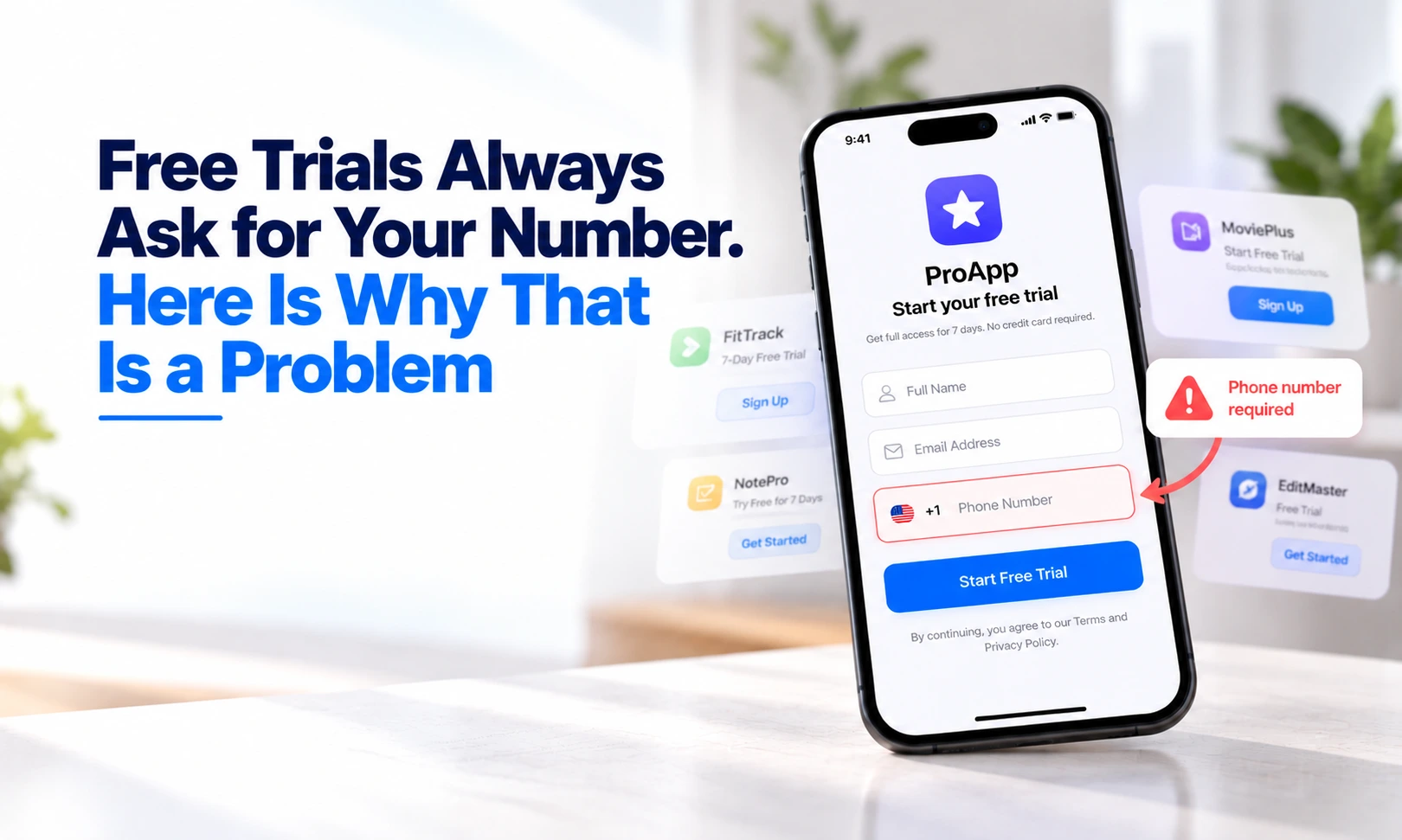
Your teen downloads a new app, signs up in seconds, and moves on. But that phone number? It stays attached to that account—sometimes forever.
From social media to gaming platforms, giveaways to unknown apps, teens often share their phone numbers without thinking twice. And once that number is out there, it’s hard to take back.
As parents, we focus on what they are doing online, but we often overlook the “digital breadcrumbs” they leave behind.
Unlike a password, a primary phone number is a permanent identifier. Once it’s leaked or sold to a marketing database, it’s nearly impossible to “reset.”
This is why proactive parents are shifting their strategy.
They are providing their teens with a second phone number- not for control, but for protection.
The Real Risk: Number Exposure (Not Just Screen Time)
Most parental control tools focus on:
- Screen time limits
- App restrictions
- Content filtering
But they often miss a critical issue: where your child’s phone number ends up. When teens use their primary number everywhere, they risk:
- Spam calls and texts
- Data leaks from breached apps
- Unwanted contact from strangers
- Long-term digital tracking tied to their real identity
And unlike a password, a phone number isn’t easy to change.
Teaching kids about the dangers of sharing their primary number is just as important as teaching them to lock the front door. Every random signup is a potential gateway for hackers and data brokers.
How to Protect Your Child’s Number Without Restricting Independence
You don’t have to take away your teen’s independence to keep them safe.
Instead, it’s to give them a “shield.”
By using a SecondLineNumber, your teen gets a dedicated number that functions exactly like a real one but without the risks.
Understanding how a second line number keeps your private data safe from hackers is the first step in building a secure digital footprint for your family.
By isolating “public” signups to a second line, the primary line stays private.
This small shift gives teens the freedom to explore while keeping their real number private.
How a Second Number Solves the Problem
Apps like SecondLineNumber make this simple. Here’s how it works:
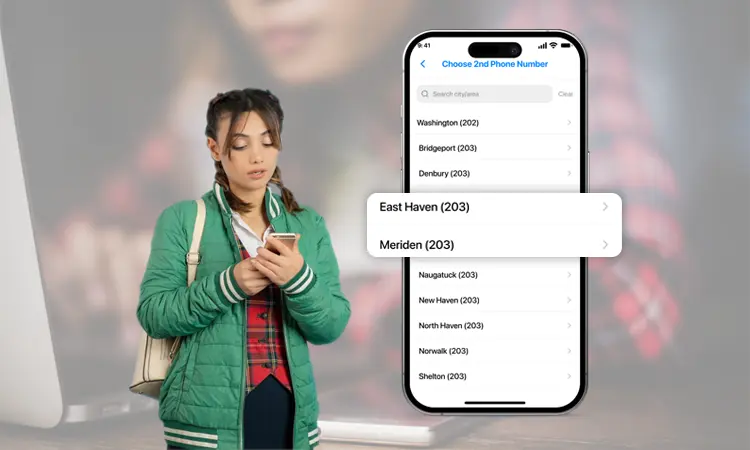
- Choose a number: Pick a US or Canadian number inside the app
- Use it for signups: Social media, games, websites—anything non-essential
- Call & text via internet: Works over WiFi or mobile data (no SIM needed)
- Keep your real number private: Your primary number stays protected
Everything runs on your existing phone—no extra device required. It’s a simple, high-tech solution for a generation that is constantly connected.
Real-Life Scenarios Parents Relate To
1. Social Media Signups
Your teen wants to join a new platform trending among friends. Instead of using their real number, they use their second number.
✔ If the platform gets hacked, their personal number stays safe.
2. Online Contests & Giveaways
Teens love entering giveaways—but these often collect phone numbers.
✔ A second number prevents spam reaching their real phone.
3. Gaming & Online Communities
Many games require phone verification.
✔ Keep gaming activity separate from real-life identity.
4. Unknown Apps & Trials
Teens experiment with apps all the time.
✔ If something feels unsafe later, they can simply stop using that number.
The Bigger Picture: Teaching Privacy Early
Today’s teens are tomorrow’s adults.
Helping them understand:
- What to share
- Where to share
- And how to protect their identity
is far more valuable than simply blocking apps.
A second phone number becomes a practical, everyday tool for that lesson.
Teens will keep signing up. That’s not changing.
But what can change is what number they use.
Give them freedom—with a layer of protection.
FAQs
Is a second number actually safer for my teen?
Yes. It acts as a digital buffer. If an app database is hacked, your teen’s primary number—linked to their bank and family contacts—remains private and untouched.
Can they still receive verification codes (2FA)?
Absolutely. The second line works just like a standard mobile number. They can receive 2FA codes for social media, gaming, and school apps instantly via Wi-Fi or data.
Does my child need a second phone or SIM card?
No. The second number lives inside the app on their current smartphone. There’s no need for extra hardware or swapping SIMs.
What happens if the second number gets spammed?
Unlike a traditional carrier number, you can easily change a VoIP number if it gets targeted by marketers, making it much easier to “reset” their digital footprint.
Is this better than using “Incognito Mode”?
Yes. Incognito only hides browsing history; it doesn’t protect the personal data (like a phone number) that your teen types into a signup form.