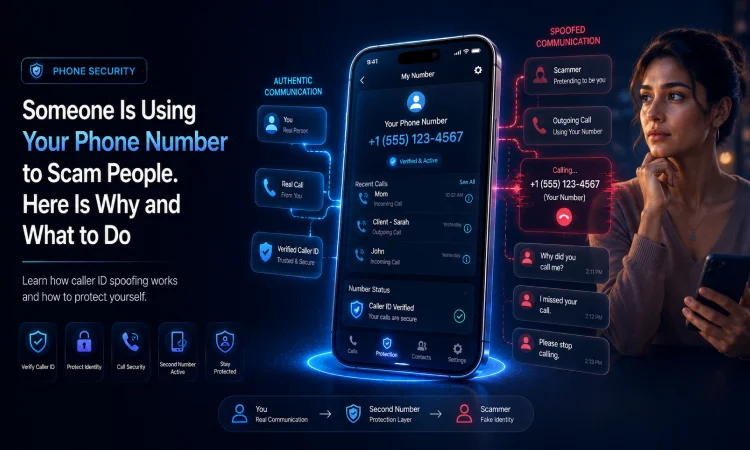
Your phone rings. A stranger on the other end tells you to stop calling them. You have never called them in your life.
Then it happens again. And again. Different people, different numbers, all furious at you for calls you never made.
If this is happening to you, your phone number is being spoofed. Someone, somewhere, is making calls to other people and displaying your number on their caller ID instead of their own. The calls come from their phone. Your number just appears as the source.
It is disorienting, a little alarming, and genuinely frustrating. The good news is that it is usually temporary. The less good news is that there is no single button you can press to make it stop immediately.
Here is what is actually going on, what you can and cannot do, and, more importantly, why it happened in the first place.
What Spoofing Actually Is and How It Works
Phone number spoofing is when someone uses software, usually a VoIP-based service, to make their call appear to come from a number they do not own. They type in any number they want, including yours, as the display number before placing the call. The person receiving the call sees your number. The call itself has nothing to do with you.
This technology is not new, and it is not particularly difficult to access. There are legitimate uses for it, like doctors who call patients from a central office number rather than a personal line, for example, or businesses that display a single callback number for all their staff. The FCC permits this in those contexts.
Where it becomes illegal is when the spoofed number is used to deceive, defraud, or harm. Scammers use it because it makes their calls harder to trace and helps them bypass call blocking systems, and increases the chance that someone will answer a call that appears to come from a local or familiar number.
Your number getting chosen is not usually personal. Scammers tend to pick numbers that match the area code of their targets, a tactic called neighbour spoofing, because people are more likely to answer a call that looks local. If your number happens to match the right area code and format, it can be picked up by an automated system and used without anyone consciously selecting it.
Why Your Number Specifically Got Chosen
This is the question most people want answered, and the honest answer is that it is usually somewhere between random and semi-random.
Spam operations that use spoofing often select numbers that are known to be active and reachable, because a legitimate-looking number that is actually answered by a real person makes their calling operation look more credible. According to security researchers and sources including Aura and Avast, scammers may specifically select numbers of people who have answered spam calls in the past, since this marks the number as live.
There is also a data angle worth knowing. According to SpectrumVoIP, scam callers may search for numbers to spoof by buying information from data brokers, skimming social media pages and websites to find numbers associated with real people, and taking note of numbers that were answered during previous spam campaigns.
In other words: the more widely your real number has circulated online, the more likely it is to show up in a data broker list, the more likely it is to eventually be selected for spoofing.
This does not mean your number will get spoofed the moment it appears anywhere online. But it is a direct connection between how widely your personal number is distributed and the category of risk it sits in. We cover the broader pattern in our blog on how your phone number ends up on spam lists and data broker databases, which explains the same underlying ecosystem from a different angle.
What You Can and Cannot Do While It Is Happening
Here is the honest version, which most articles soft-pedal: there is currently no way to immediately stop someone from spoofing your number. The mobile network infrastructure does not give individual users that level of control. This is a gap that the FCC and carriers have been working on through systems like STIR and SHAKEN caller ID authentication, but it has not eliminated the problem.
What this means practically is that if your number is currently being spoofed, the most sensible response is a combination of damage limitation and patience, because spoofing campaigns tend to cycle through numbers quickly and move on.
Record a new voicemail message. Something clear and brief: “My number is currently being used by scammers without my knowledge. I did not call you. Please do not call back.” This stops the flood of return calls from angry people who think they are reaching the source of the spam.
Turn on silence for unknown callers. This is in your iPhone settings under ‘Phone’ or under ‘Settings’ on most Android devices. It will send all calls from numbers not in your contacts to voicemail automatically. This is a temporary measure, since it will silence legitimate calls too, but during the peak of a spoofing episode it prevents you from being constantly interrupted by strangers returning what they think is your call.
Do not engage. The FCC’s own guidance is clear: do not answer calls from unknown numbers, and if you do, hang up immediately. Do not press any keys to opt out. Engaging at any level can signal that the number is active, which can lead to more contact rather than less.
Contact your carrier. Ask them what tools they offer for spam protection. Most major carriers now have services that can flag or filter calls flagged as suspicious. AT&T’s ActiveArmor and T-Mobile’s Scam Shield are examples. These do not stop your number from being spoofed but they may reduce the volume of confused return calls you receive.
File a report. In the US, the FCC allows you to file a complaint at fcc.gov. The FTC also accepts reports at ftc.gov. Individual reports rarely produce immediate results, but they contribute to the pattern data that leads to enforcement actions.
How Long This Tends to Last
According to multiple sources including Incogni and the FCC, most spoofing episodes last only a few hours. Spam operations rotate through numbers frequently, because the same number used repeatedly gets blocked and flagged by carrier systems quickly. Once the system has moved on, your number becomes inactive as a spoofed caller ID and the calls from strangers tend to stop within a day or two.
If the problem persists beyond a week, contact your carrier directly. A persistent campaign using your specific number is unusual and worth escalating beyond general complaint forms.
The Longer Question: Why Did This Happen and Can It Happen Again
Spoofing is partially random, but the selection pool is not. Numbers that appear more frequently across public listings, data broker sites, and call logs are more likely to end up in that pool. This is the part nobody mentions because it is uncomfortable: the same thing that makes you easy to reach legitimately makes you a more attractive number to borrow.
This is one of the underlying reasons why keeping your real number out of low-trust contexts matters beyond just spam calls. Your personal number, the one tied to your identity, your accounts, and your family, is a much smaller target if it circulates in fewer places.
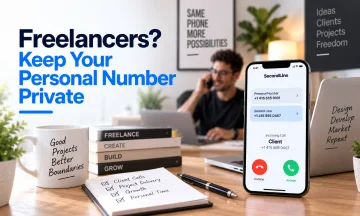
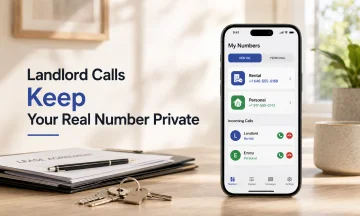
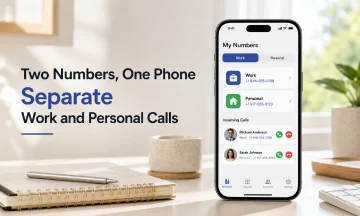
A second phone number used for online signups, marketplace listings, job applications, and anywhere else you are not confident in the destination is one practical way to reduce how widely your real number circulates. It does not prevent spoofing entirely, since even completely private numbers can be picked in theory. But it meaningfully reduces the size of the pool your number sits in. You can see how this works in practice on our features page.
Our blog on how to protect your phone number without changing it covers the full range of practical steps, including this one, in one place.
→ Get a second number to keep your real number out of low trust situations
Frequently Asked Questions
Why are strangers calling me saying I called them when I did not?
Your phone number is most likely being spoofed. Someone is using software to make their calls appear to come from your number on other people’s caller IDs. You did not make those calls and they have no access to your phone. The calls originate from their device entirely. Your number is just being displayed as the source.
Can I stop someone from spoofing my phone number?
Not directly. There is currently no mechanism that allows individual phone users to prevent their number from being used as a spoofed caller ID. What you can do is record a voicemail explaining the situation, turn on silence for unknown callers temporarily, contact your carrier about spam filtering, and file reports with the FCC and FTC. Most spoofing episodes last only a few hours before the operation moves to a different number.
How did my number get chosen for spoofing?
Number selection by spoofing operations is partly random but tends to favour numbers associated with active users and the right local area code. Numbers that appear frequently in public listings or data broker databases or have been answered during previous spam calls are more likely to end up in these pools. The more widely your personal number circulates online, the more likely it sits in that category.
Is it illegal for someone to spoof my phone number?
Under the Truth in Caller ID Act, spoofing with the intent to defraud, cause harm, or wrongly obtain something of value is illegal in the US and carries fines of up to ten thousand dollars per violation. However, spoofing itself is not always illegal, since it has legitimate uses. The difficulty is that catching and prosecuting individuals behind large-scale spam operations is technically and jurisdictionally complex.
Will the calls and messages from strangers stop on their own?
Yes, in most cases. Spoofing campaigns rotate through numbers quickly because numbers that generate complaints and return calls get blocked by carrier systems. Most episodes resolve within hours to a couple of days. If your number continues to be used beyond a week, contact your carrier and file formal complaints with the FCC and FTC to escalate.