If you’ve ever wondered what happens to your phone number if you stop using it, or if someone else can access your old number?
Here’s the direct answer:
Unused phone numbers are often recycled and reassigned to new users.
Not immediately or always quickly. Eventually, your number is assigned to someone else, and your digital trail accounts, apps, messaging profiles-remains tied to it.
This is called number recycling, and it’s one of the most underestimated privacy risks in everyday digital life.
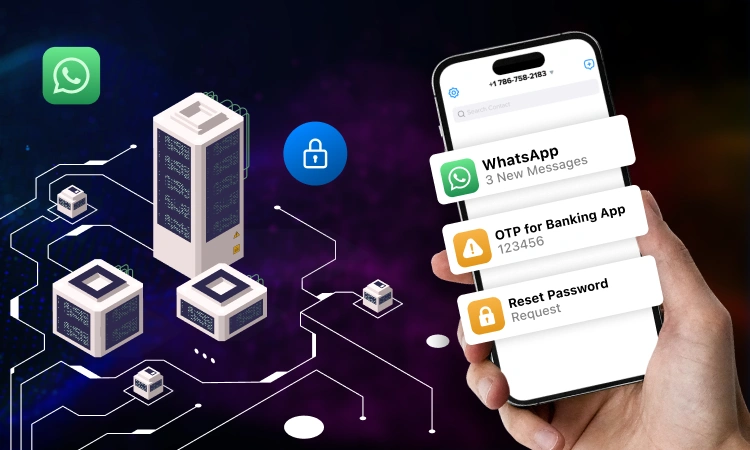
And when that happens, it can quietly create serious security risks – especially apps like WhatsApp, banking apps, email accounts, and any service that sends OTP (one-time passwords) to your number.
If you’re thinking of ditching a SIM and moving on, this article explains exactly what you’re leaving behind, and how you can avoid any security risks.
What Actually Happens When You Stop Using a Number
Telecom providers don’t permanently retire from most numbers. When you:
- Stop recharging.
- Cancel a SIM.
- Leave a country
- Stop using a prepaid line.
That number usually goes into a “cooling period” or “recycling timeline.” The recycling timeline varies:
- Postpaid plans: typically, 90 days after cancellation before the number re-enters in the pool.
- Prepaid SIMs can take 30-60 days from the last top-up or activity.
- Inactive eSIMs vary by carrier, but inactivity periods trigger the same reuse process.
After that? It gets reassigned to someone else.
The Real Risk: Account Takeovers Through Recycled Numbers
Here’s where it becomes dangerous. Many platforms use your phone number as:
- A login identifier
- A password recovery method
- A two-factor authentication (2FA) destination
If someone else gets your old number, they may receive:
- OTP codes
- Password reset links
- Verification calls
- Account recovery messages
You don’t get notified. They receive them.
Scenario 1: OTP goes to the wrong person
Let’s say you used your old number for your email, social media accounts, banking apps, crypto exchanges, or payment platforms. You’ve moved on from your old number. But your bank still has it on file. You stop using the number. Months pass. It gets reassigned.
Now someone attempts to log in to one of your accounts and requests a password reset.
- The one-time passcode doesn’t come to you.
- It goes to the new owner of your old number.
This isn’t a rare edge case. SMS-based authentication still powers millions of login systems worldwide. If your email account still lists that old number as a recovery method, a recycled number can become a doorway. Not because someone hacked you. But because you moved on from a number, your accounts didn’t. Most people never realize this until it’s too late.
Scenario 2: WhatsApp Account Gap
The more overlooked issue involves WhatsApp.
WhatsApp accounts are tied directly to phone numbers. There are no usernames separating identity from contact details. Your number is your identity.
If you stop using a number and don’t formally delete your WhatsApp account, that account remains attached to it.
When the number is reassigned, the new owner can install WhatsApp, verify the number, and activate an account under it. Your previous session gets deregistered automatically.
Your old WhatsApp account may still be accessible if it wasn’t properly deactivated before the number changed hands.
Old group chats may still surface the number, giving the new owner unexpected visibility into communities you were part of
WhatsApp doesn’t automatically purge inactive accounts tied to recycled numbers. The gap between when you stop using the number and when WhatsApp catches up is exactly where exposure happens.
This is called account reassignment risk, and it’s rarely discussed.
Why WhatsApp Is Particularly Vulnerable Unlike email accounts, WhatsApp doesn’t use usernames. Your identity = your phone number. If the number changes hands: Identity shifts instantly. There’s no “this number used to belong to someone else” warning. Your contacts won’t know.
For business owners, freelancers, travelers, or gig workers, this can cause:
- Reputation damage
- Lost clients
- Privacy leaks
- Social engineering attacks
The gap is that WhatsApp’s account deletion process requires your action. If you stop using the number without first explicitly deleting the WhatsApp account, the account lingers. The longer it lingers, the more likely it is that a new number owner eventually interacts with it.
This is why the order of operations matters:
- Delete your WhatsApp account before abandoning the number, not after.
- Update linked accounts before the number goes inactive, not when you remember.
- Don’t assume inactivity equals invisibility; it doesn’t.
Scenario 3: Account Recovery Takeover
Beyond OTPs, many platforms use phone numbers as a full account recovery method. Think about the services that let you reset your password entirely via SMS.
- Email platforms
- Social media accounts
- E-commerce and delivery apps
- Medical and healthcare portals
- Government and tax services
If any of these still list your old number as the primary recovery method, the person who now has that number may be able to request a reset. Not guaranteed access – but a door that shouldn’t be open at all.
Now imagine this chain reaction:
- Your old number is reassigned.
- The new user has requested a password reset for your email address.
- An OTP arrives at their device.
- They reset your email.
- They reset other linked accounts.
One recycled number can unlock an entire digital identity. That’s why security experts recommend not relying solely on SMS-based authentication.
Why Travelers Are Especially at Risk
This is especially common when people:
- Travel internationally
- Buy temporary local SIM cards.
- Stop recharging after leaving.
- Use prepaid travel numbers.
Six months later, that number could belong to someone else – while still linked to your accounts. If you frequently switch countries, the risk increases.
How to Leave a Number Cleanly
If you’re planning to stop using a number, the order of operations matters. Before your phone number becomes inactive, update it across critical accounts, especially email, banking, social media, and cloud storage platforms. Those are your primary identity anchors.
If you use WhatsApp on that number, delete the account from within the app before abandoning the SIM.
Inside WhatsApp: Settings → Account → Delete My Account.
Uninstalling the app isn’t enough. The account itself must be formally deleted. Check email services-Gmail, Outlook, and Apple ID all use phone numbers for recovery; update these first.
Look at e-commerce accounts-Amazon, eBay, and similar platforms to store phone numbers for account verification.
- Switch to:
- Authenticator apps
- Hardware keys
- Email-based 2FA (with strong email security)
This isn’t a one-time task. It’s the kind of audit people wish they’d done before abandoning a number, not after.
The Smarter Approach: Use a Digital Second Line
Most of the exposure risk from number recycling comes from one habit: using your personal number for everything, then abandoning it when things get messy.
A cleaner approach is to separate from the start – using a second number for contexts where you don’t want long-term exposure. That way, your personal number stays stable, connected to things that genuinely matter, and never ends up on a recycling timeline.
Maintaining a dedicated second number doesn’t just reduce recycling risks; it also improves how you manage and document important conversations. When professional or service-related calls live on a separate number, they don’t get buried under personal chats and everyday noise. That separation isn’t just convenient; it’s protective. It’s one of the reasons important calls should never go to your personal phone number.
Keep your personal number for:
- Banking and financial accounts
- Family and close contacts
- Medical and government services
Use a second number for:
- Online sign-ups and marketplace listings
- Dating apps and short-term interactions
- Work contacts and professional contexts
- Any situation where your number might eventually end up on the wrong list
This is the model behind the Second Line Number: a dedicated second line you can use intentionally without ever becoming entangled with your core digital identity. If the second number needs to be retired, you retire from it cleanly, without leaving a trail.
Instead of buying temporary SIM cards every time you travel, a digital eSIM-based second number lets you:
- Keep long-term control of your number.
- Avoid number recycling issues.
- Separate personal and public accounts.
- Maintain WhatsApp and OTP continuity.
- Stay reachable across countries.
- No store visits.
- No physical SIM swaps.
- No abandoned numbers floating back into circulation.
- When your number stays yours, your digital identity stays safer.
Final Thoughts
When you stop using a phone number, it doesn’t disappear.
It gets recycled.
And in a world where your phone number is tied to banking, social media, messaging, and identity verification, that recycling can quietly turn into a security vulnerability.
Before you let a number go, make sure your digital life has moved on, too.
Because someone else may be next in line to use it.
Frequently Asked Questions
Can someone really access my accounts through my old number?
Yes – if your accounts use SMS for password recovery or two-factor authentication and you haven’t updated them.
How long before a phone number gets recycled?
It depends on the telecom provider. It can range from a few weeks to several months after inactivity.
Will the new user see my old WhatsApp chat?
No. Chats are stored on devices. However, they can receive new messages and activate the number on WhatsApp.
Is deleting the SIM enough?
No. You must:
- Update linked accounts.
- Remove or delete WhatsApp.
- Change security settings