We have all been there. You sign up for a 10% discount at an online store or register for a one-time webinar. You give them your phone number because it’s a required field.
Fast forward three months: you’re receiving daily texts about “Flash Sales,” insurance quotes, and “exclusive offers” from companies you’ve never even heard of.
Most people ask: “Why do I get marketing texts after signing up for just one thing?” or “How did this company get my number?”
The truth is that your phone number rarely stays where you gave it. In 2026, your contact information is a high-value asset that is frequently shared, moved, and resold across a massive ecosystem of “marketing partners.”
Why Companies Ask for Your Phone Number
Phone numbers are extremely valuable for businesses. Compared to email, text messages have much higher open rates. This is why companies often encourage customers to provide their number during:
- Account registrations
- Discount or coupon signups
- Loyalty programs
- Online purchases
- App installations
What Usually Happens After You Share Your Number
When you click “I agree to the Terms and Conditions,” you are often unknowingly consenting to more than just a single text. Deep in the fine print; many companies include clauses that allow them to share your data with “trusted third-party affiliates. This creates a domino effect:
- You give Company A your number for a discount.
- Company A shares its “lead list” with Company B and C (their partners).
- If Company B is a data aggregator, they might sell that list to dozens of other businesses.
This is the hidden “signup reuse pattern” that turns one interaction into years of digital noise. For a deeper look, see our guide on why using a single phone number everywhere is dangerous.
Why Unsubscribing Doesn’t Always Work
The standard advice is to reply “STOP.” While this works for legitimate, law-abiding brands, it can actually backfire with less reputable ones.
When you reply “STOP” to a spammer, you are confirming that your phone number is active and that a real person is reading the messages. This can actually make your number more valuable to data brokers, leading to even more texts from different sources.
This is a reactive approach. To truly protect yourself, you need a proactive strategy that stops the cycle before it starts.
The 2026 Data Scraping
It’s not just the companies you sign up with.
Sophisticated bots now crawl the web to find numbers listed on public profiles, directories, or leaked databases.
If your personal number is linked to your social media or a public business listing, it’s likely already in several marketing databases.
This exposure is why many users are moving toward alternative phone numbers for everyday situations to keep their primary line “off the grid.”
A Simpler Way to Protect Your Main Phone Number
If you want to keep your personal phone for family and friends, you must stop giving your “identity key” (your primary number) to every website that asks for it.
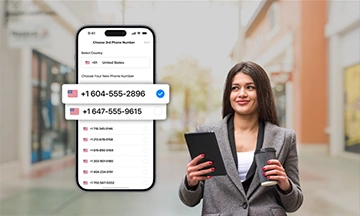
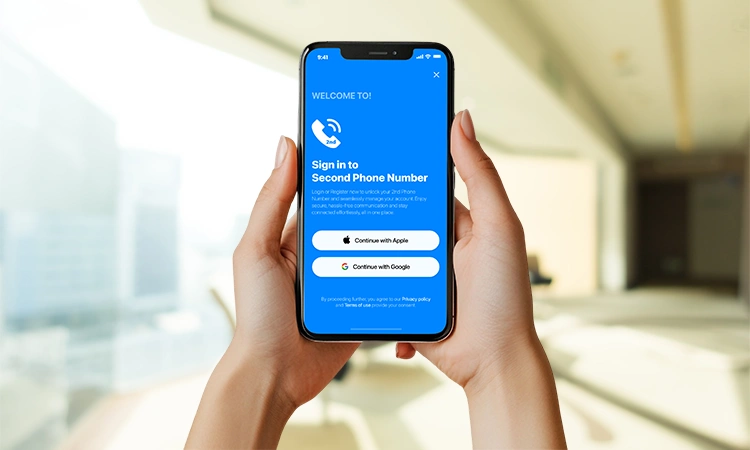
By using a Second Phone Number for all your digital signups, you change the dynamic:
- All marketing texts go to a separate app. Your main inbox stays clean.
- If a specific number gets too much spam, you can change it without having to update your bank, your doctor, or your family.
- You can still receive the OTPs (One-Time Passwords) needed to access your accounts without exposing your “real” life.
If you’re curious about how this works with apps, check out our virtual number verification compatibility guide.
Treat Your Number Like a Key
Your phone number is the key to your digital life. You wouldn’t give a copy of your house key to every store you visit—so why give them your phone number?
The next time a website asks for your contact details in exchange for a “free” service, remember that the service isn’t free—you are paying with your privacy.
Using a second line lets you enjoy the benefits of the digital world without the years of marketing “hangover”.
FAQs
1. How did a company I never visited get my phone number?
They likely purchased it from a data broker or a “marketing partner” of a company you did sign up with. This is a common practice called lead sharing.
2. Does replying “STOP” actually stop the text?
For major brands, yes. For unknown spammers, it may confirm your number is active, leading to more spam. Using a second line is a safer way to manage these interactions.
3. Should I use my real number for store loyalty programs?
Only if you don’t mind receiving marketing texts for years. A second line is ideal for loyalty programs, letting you earn rewards without intrusive calls.
4. Can companies see my name if they have my phone number?
Often, yes. Data enrichment tools enable companies to link phone numbers to names, addresses, and even social media profiles.
5. How can I prevent marketing messages on my personal number?
The most effective way is data minimization–giving out your primary number as rarely as possible. Use a separate phone number for online signups and registrations. This keeps marketing messages separate from their personal communication.