Most people think the only way to stop spam or protect their privacy is to change their phone number.
But that’s disruptive:
- You lose contacts
- You must update banks, apps, and accounts
- It creates unnecessary hassle
So, the real question becomes: How can I protect my phone number without changing it?
The answer is simple: add a layer of protection instead of replacing what you already have.
You don’t need a new identity – just a second line.
The Smarter Solution: Layered Protection
Instead of changing your number, create a buffer layer between your real number and the outside world. Think of it like this:
- Primary number = Private (family, bank, work)
- Second number = Public (apps, signups, unknown contacts)
This approach keeps your real number safe while letting you continue using services freely.
SEE More : Why using One Phone number is Dangerous
Real Life Scenarios: How to Shield Your Real Number
How does this look in daily life? It’s simpler than you think:
- Online Marketplaces: Selling a couch on Craigslist? Use your second line. If the buyer gets weird, you can block them or discard the number without affecting your personal life.
- Dating Apps: Protect your identity until you’re sure about a match. Since SecondLineNumber uses your existing data or Wi-Fi, you can text and call safely from your current device.
- Loyalty Programs: Don’t let grocery stores or retail chains track your shopping habits via your primary digits. Give them your “public” number instead.
Why This Approach Works Better Than Blocking
Many mobile carriers offer “spam blocking” services, but these are reactive—they try to catch the spam after your number has already been leaked.
Instead, a second line number is proactive protection.
- Prevents exposure in the first place
- Reduces spam long-term
- Keeps your identity safer
If your secondary Phone number ever gets too “noisy” with spam, you can simply swap it for a new one within the app. Your primary number stays clean, quiet, and private.
You don’t need a new SIM card, and you don’t need to carry two phones.
You don’t need to change your number to protect it.
Just stop giving it away.
Use a second line as your shield and keep your real number truly personal.
FAQs
Can I really protect my phone number without changing it?
Yes. By using a second number for public use (like signups and unknown contacts), you can keep your primary number private and reduce exposure.
Will I miss calls to my primary number?
Not at all. Both numbers stay active on your phone. Think of it as having two different “inboxes” on one device.
Will I still receive calls and texts normally?
Yes. Your second number works over the internet (WiFi or mobile data), so you can call and text just like a regular number.
Is it hard to set up a secondline number?
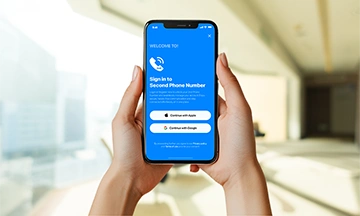
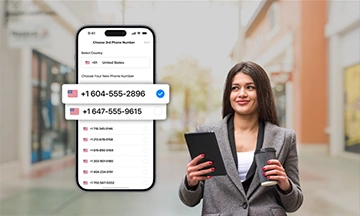
It takes less than two minutes. Pick a US or Canadian number, and you’re ready to start protecting your primary digits immediately.
Can I use it for WhatsApp or Telegram?
Yes. Many users use their second line to register for messaging apps to keep their personal accounts separate from work or public groups.