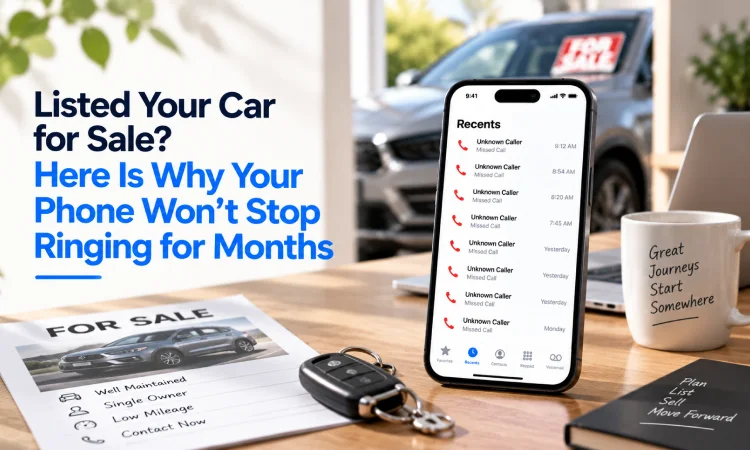
You listed your car last week. You sold it on day three. The calls have not stopped.
Extended warranty companies. Scrap metal buyers. Insurance quotes. Finance companies who somehow already know the make and model. Numbers from area codes you have never heard of calling back to back between 9am and 7pm every day.
This is not a coincidence, and it is not random. What happened the moment you published that listing with your phone number is exactly what this blog is about.
What Happens the Moment Your Listing Goes Live
Classifieds sites like Autotrader, Craigslist, Facebook Marketplace, Gumtree, and Auto Trader UK are public websites. That means their content, including every phone number in every listing, is technically accessible to any automated system that wants to collect it.
Scraper bots scan classifieds sites constantly. Some are operated by data brokers building contact lists. Some are run by lead generation companies who sell those lists to warranty providers, insurance companies, finance brokers, and scrap dealers. Some are run by scammers looking for recently active sellers, because someone who just listed a high-value item is a confirmed financially active adult with money on their mind.
The scraping can happen within minutes of your ad going live. According to LifeLock’s research on auto fraud, the FTC’s Consumer Sentinel Network received over 207,000 auto-related fraud reports in 2024, making it the seventh most common fraud category. Many of those contacts begin with a number harvested from a listing.
The calls that come after you sell a car are not because you bought the car from a dealership and gave them your number. They are because your number, attached to a specific vehicle with specific details, entered a commercial data ecosystem the moment your listing was published.
Why the Calls Continue After the Ad Is Deleted
This surprises almost everyone. You deleted the listing. The car is gone. The calls continue for weeks.
There are two reasons for this.
First, scrapers do not just collect your number. They collect your number alongside the listing data: the make, model, year, mileage, price, and your general location. Once that package of information is in a database and sold to a list buyer, the fact that your listing no longer exists is irrelevant. The list buyer has already purchased your contact and will use it regardless of whether the original listing is live.
Second, lists get sold multiple times. A data broker who collected your number might sell that list to five different companies. Those companies might resell it to their own partners. The same number can end up on dozens of separate calling lists from a single original scrape, each one contacting you independently, on their own schedule.
This is exactly the same pattern our blog on how one signup turns into years of marketing texts covers in a different context. The mechanics are identical: one point of data entry, multiple downstream contacts, no clear way to remove yourself once you are in.
The Car Warranty Call Specifically
You will likely already have received one. An automated voice or a live caller claiming your vehicle’s factory warranty is about to expire or has already expired and offering to extend or renew it.
These calls are so persistent that the FTC, FCC, and consumer protection organisations publish specific guidance on them. The FTC Consumer Sentinel Network recorded auto-related fraud as one of the top categories year after year. The calls reference your actual vehicle because the scraped listing data told them what car you had.
Some of these calls are from legitimate if aggressively marketed warranty companies. Many are not. The ones asking for payment details upfront, requesting access to your vehicle identification number without an obvious legitimate reason, or pressuring for an immediate decision are the kind to end and report.
The point for this blog is not the calls themselves. It is that the reason they have your number and your vehicle details in the same place is because your real personal number was on the listing.
Property Listings, Gumtree, and High-Value Items Follow the Same Pattern
Cars get the most attention because of the warranty call phenomenon, but the same pattern applies to any high-value or high-interest listing.
Property listings with a direct contact number attract scraping from letting agents, mortgage brokers, conveyancing firms, and their data partners. If you have ever listed a property for sale or rent with your mobile number and then received persistent calls from solicitors, surveyors, or financial advisors you never contacted, this is why.
Gumtree, Craigslist, Facebook Marketplace, and similar platforms for electronics, furniture, and other goods attract scrapers too, though the downstream call volume tends to be lower than for cars and property because the commercial value of the lead is lower. The risk of harassment and scam contact is still present.
The Fix That Works Every Time: A Number That Is Not Your Real One
Every other approach to this problem is reactive. You can register with the TPS or the Do Not Call Registry. You can block numbers one at a time. You can install spam filtering apps. None of these stop your number from being on the lists in the first place.
The only approach that actually prevents the problem is not putting your real number on the listing at all.
A second phone number used for classifieds listings gives the listing exactly what it needs: a real, working number that callers can reach. If a genuine buyer calls, you answer. If the sale completes and the calls from scraped lists start arriving, they go to a number that is not connected to your personal contacts, your banking, your family, or everything else your real number is attached to.
If the volume becomes unmanageable, you can silence that number or stop using it without disrupting anything else. The next time you list a vehicle or a high-value item, you use it again. Your real number never entered the equation.
You can see exactly how the second line number is built for this kind of use on our features page.
→ Get a second number for listings so your real number never ends up on a scraper’s list
What to Do If the Calls Are Already Coming In
If you have already listed with your real number and the calls have started, here is what actually helps.
Do not engage with any call that references your vehicle but that you did not initiate. Do not confirm your name, your vehicle details, or your address. Engagement confirms your number is active and can increase call volume.
Register your number with the Telephone Preference Service if you are in the UK or the National Do Not Call Registry if you are in the US. This will not stop scam operations, but it reduces calls from companies that follow the rules.
Use your phone’s built-in spam filtering. Both iPhone and Android now have settings to silence calls from unknown numbers automatically. This is a blunt instrument because it catches legitimate calls too, but it is useful during peak call periods immediately after a listing.
If calls include specific pressure for payment, financial details, or vehicle identification numbers, report them to Action Fraud in the UK or the FTC in the US.
Our blog on why blocking spam calls does not work and what does covers the broader blocking strategy in more detail, since the principle is the same regardless of how the calls originated.
If you need any help with Second Line Number’s setup or features, our support centre is available, or you can contact us directly.
Frequently Asked Questions
Why am I getting so many calls after selling my car?
Your phone number was scraped from your listing by automated bots that monitor classifieds sites, sometimes within minutes of the listing going live. That number, along with your vehicle details, was then sold to data brokers who passed it to warranty companies, insurance brokers, finance providers, and in some cases scam operations. The calls continue after you delete the listing because the scraped data was already sold before you removed the ad.
How did warranty companies get my car details along with my number?
Classifieds listings include the make, model, year, and other details of the vehicle alongside the contact number. Scrapers collect all of this together as a package. This is why calls reference your specific vehicle rather than asking what you drive. They already have the listing data.
Will the calls stop after the listing is deleted?
Not immediately and not completely. Data that has already been sold into commercial lists does not disappear when the original listing is removed. Expect calls to continue for several weeks to a few months. The volume tends to reduce over time as the list ages and becomes less commercially valuable. Registering with the TPS or Do Not Call Registry speeds this up for legitimate callers.
Is there a way to stop my number being scraped from classifieds sites?
Not if you list with your real number on a public platform. The only effective prevention is using a different number for the listing itself, one that is not your personal primary number. This allows the listing to function normally while keeping your real number out of the data ecosystem that follows a high-value listing.
Are all the calls after a car listing scams?
No. Some are from legitimate warranty and insurance companies that operate aggressive but legal outbound calling operations. The distinction matters because you should ignore both categories when they originate from unsolicited inbound calls, but the approach to reporting them differs. Calls asking for upfront payment, financial details, or personal information without a clear legitimate context should be reported to the relevant consumer protection authority.